Module guides
Coworkee is organised into nine modules, reachable from the sidebar after login. This page explains how to use each one. Visibility of actions depends on your role.
Employees & org chart
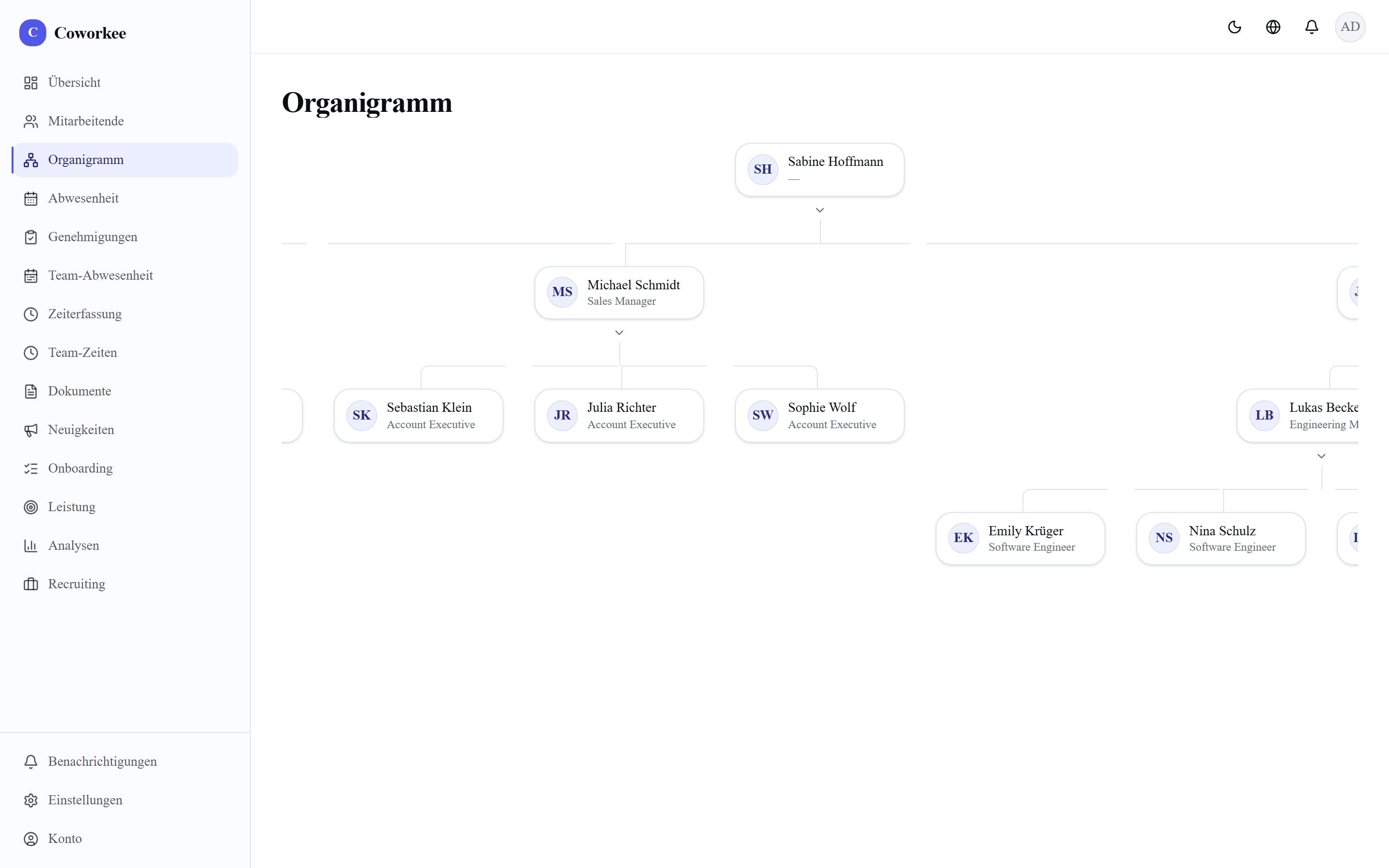
The Employees directory is the heart of Coworkee.
- Directory — search, filter and page through everyone. Everyone can browse; HR/Admin can create and edit.
- Profiles — each employee has a detail profile: contact data, role, department, contract type, manager, start date, plus tabs for documents and absence.
- Create / edit — HR/Admin add new employees and keep records current. Setting an employee's manager is what builds the reporting lines.
- Org chart (
/org) — a live organisational chart generated from those reporting lines. Change a manager and the chart updates.
Absence & approval workflow
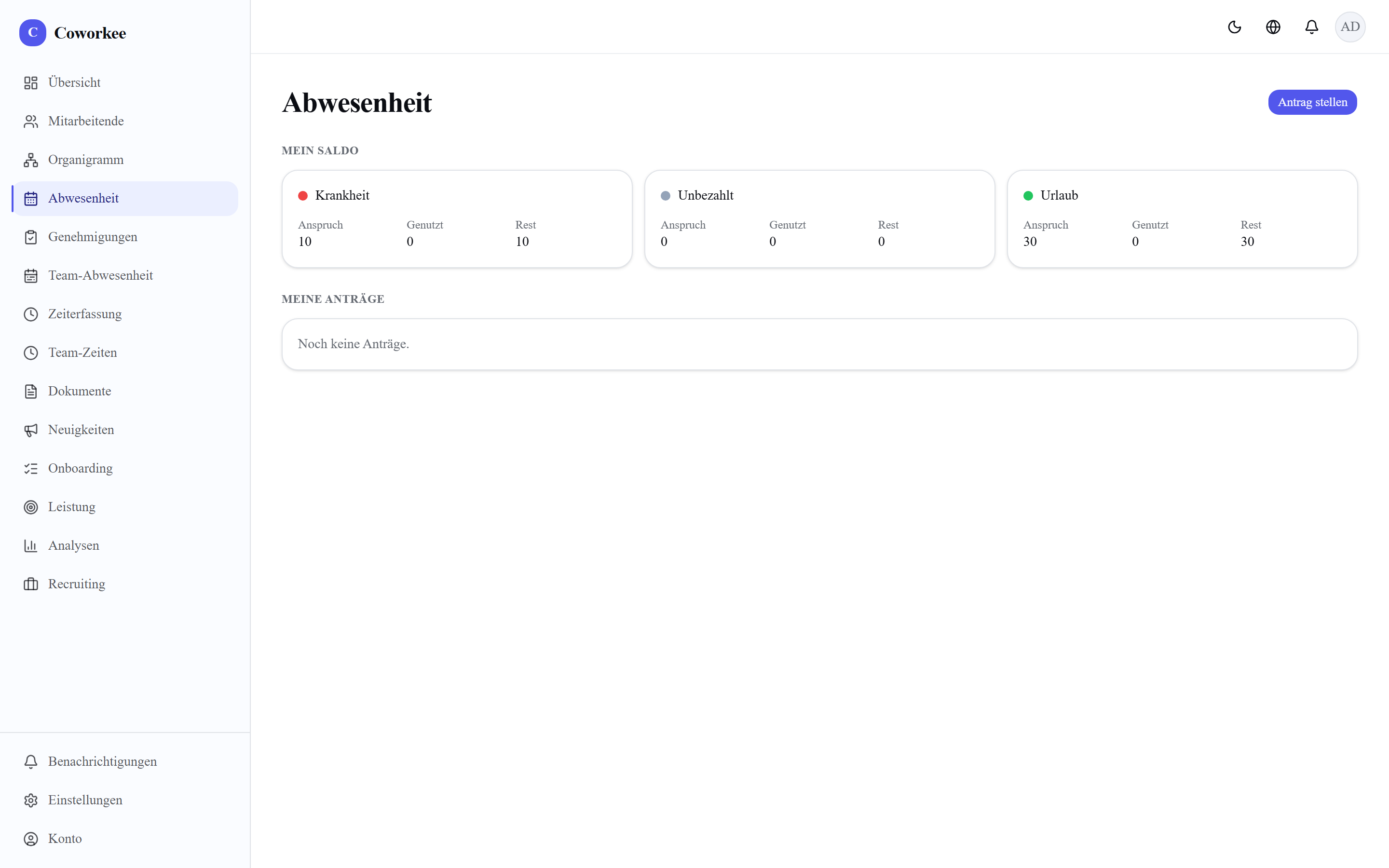
Manage leave from request through approval, with entitlements per employee.
- Entitlements — HR/Admin set each employee's leave entitlement (their annual balance). Do this before people start requesting.
- Request — an employee requests absence for a date range and type; the balance is checked.
- Approval workflow — the request goes to the approver (Manager for their team, or HR/Admin), who approves or rejects. Balances update on approval.
- Team overview — a calendar showing who is away, so overlaps are visible before approving.
Time tracking
- Clock in / out — employees record working time with start/stop.
- Weekly overview — hours per day and week totals for the individual.
- Manual entries — add or correct entries when a clock-in was missed.
- Team times — managers see their team's recorded time.
Documents
Secure, private document storage per employee — nothing here is ever served publicly.
- Private storage — files live under
storage/documents/on the server (a persistent volume), never in the public web root. - Access-guarded download — every download goes through an access check (
/api/documents/[id]); you only get files you're allowed to see. - HR upload — HR/Admin upload documents onto an employee's profile (contracts, certificates, etc.).
- Profile tab — documents appear on the employee's profile under a Documents tab.
Onboarding
Turn a repeatable checklist into a tracked process for each new hire.
- Templates — HR/Admin build reusable onboarding checklist templates (the list of tasks a new joiner needs).
- Per-employee processes — instantiate a template for a specific employee; it becomes a live process.
- Checkable tasks — tasks are ticked off as they're completed, so onboarding progress is visible at a glance.
Performance
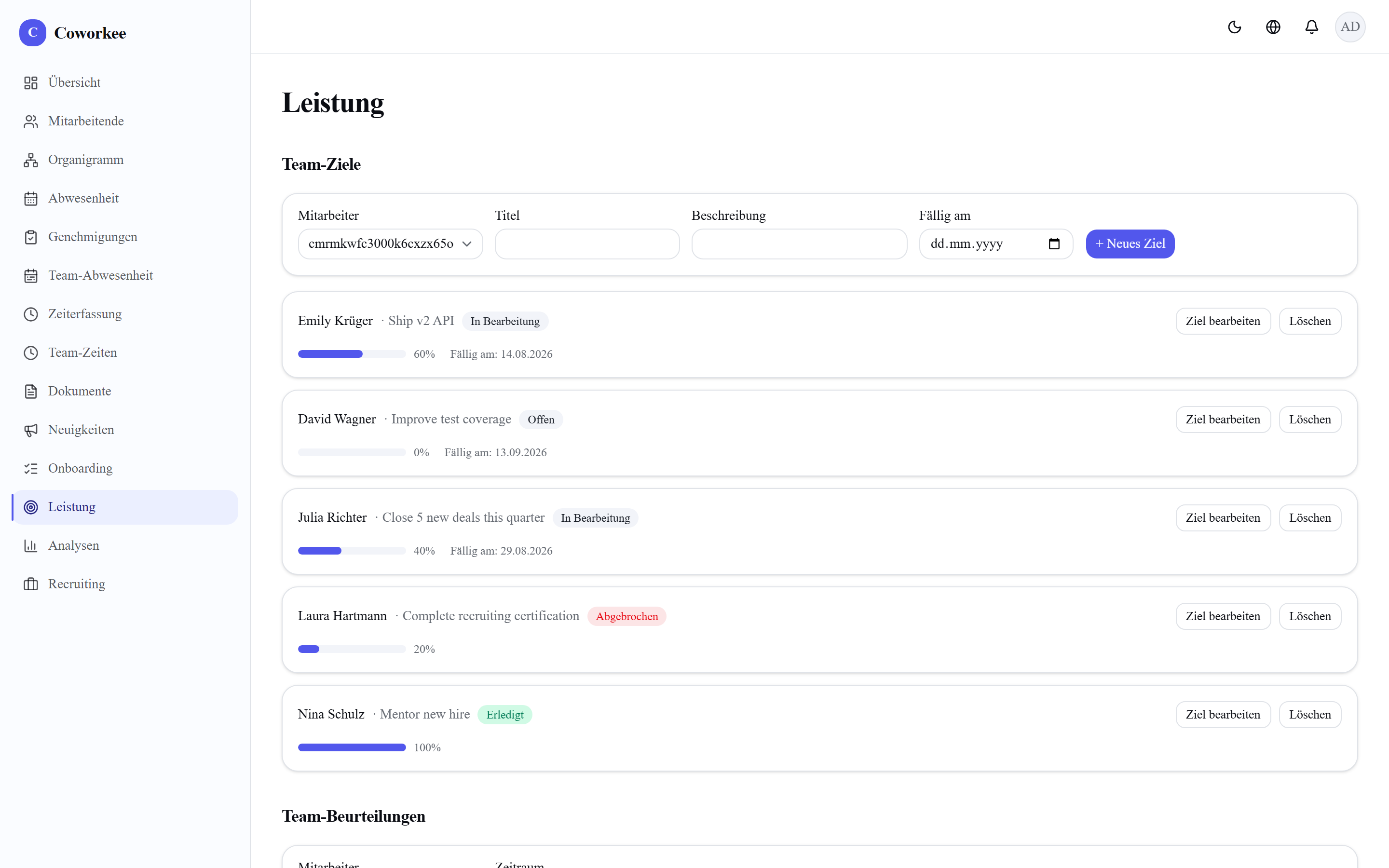
Two connected tools: goals and reviews.
- Goals — set objectives with a target; employees update their own progress (self-service), so goals stay current without a manager chasing them.
- Performance reviews — a review moves through Draft → Submitted → Acknowledged. The reviewer drafts and submits; the employee acknowledges, closing the loop.
Analytics
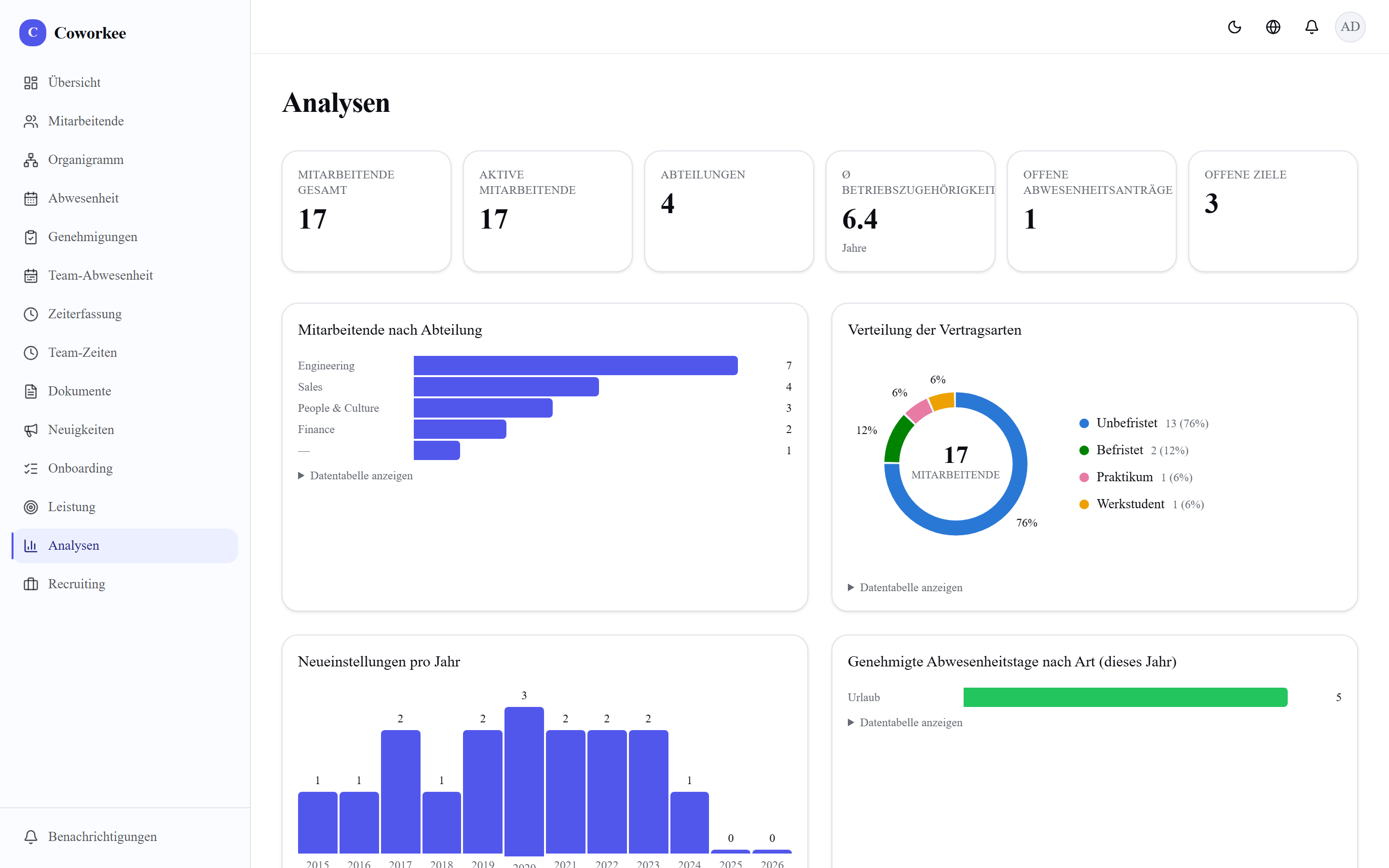
An HR dashboard (HR/Admin) with KPIs and charts:
- Headcount over time,
- Contract types breakdown,
- New hires,
- Absence days.
Use it to spot trends — growth, attrition, absence load — at a glance.
Recruiting
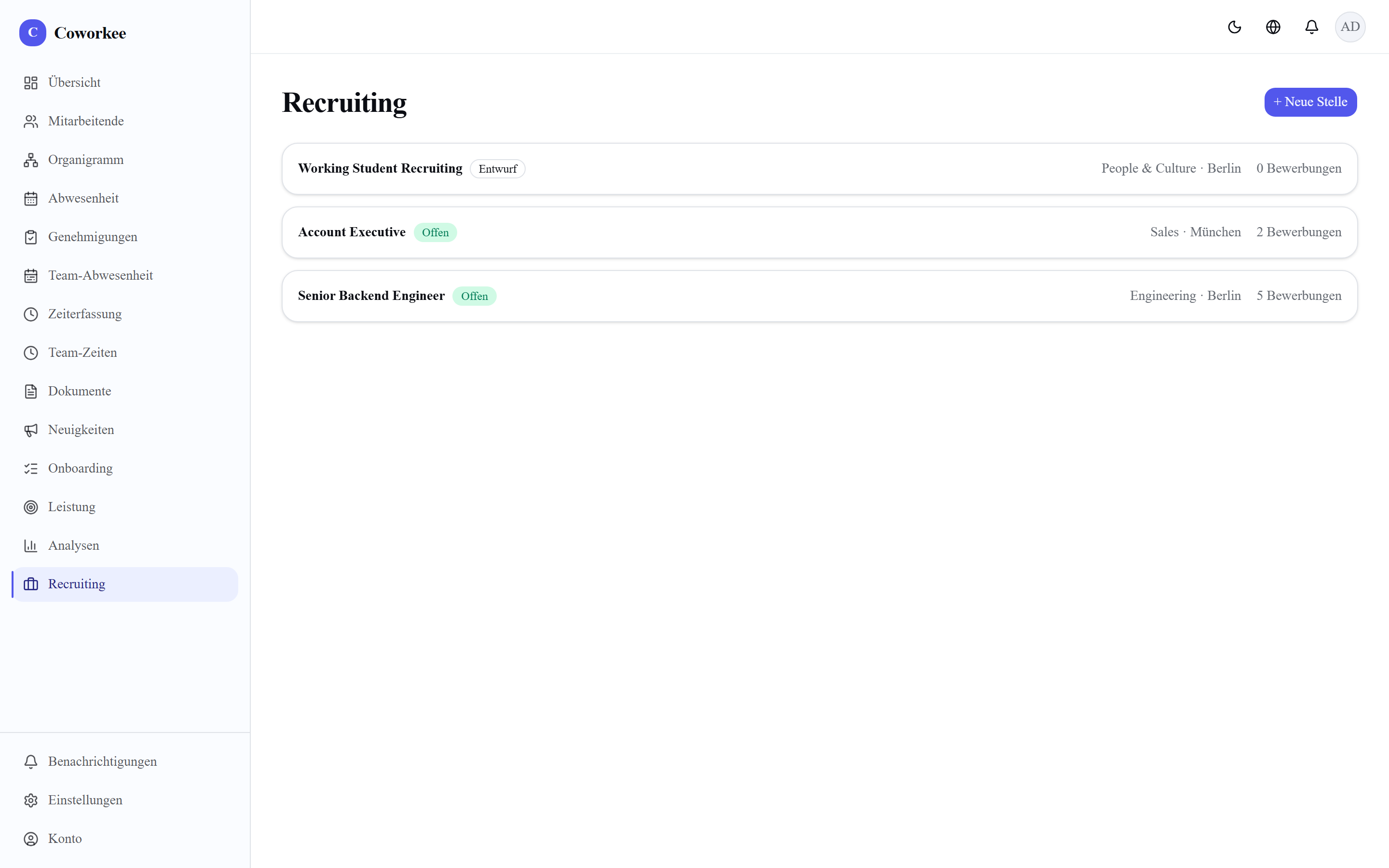
- Job postings — create and manage open positions.
- Applicant pipeline — a Kanban board with six stages; drag applicants along as they progress through the hiring process.
News & notifications
- Announcement feed — HR/Admin publish company news; everyone sees the feed.
- In-app notifications — the bell in the top bar surfaces notifications (new announcements, absence decisions, etc.) without email.